The Science Behind Fireworks: How Colours and Effects Are Created
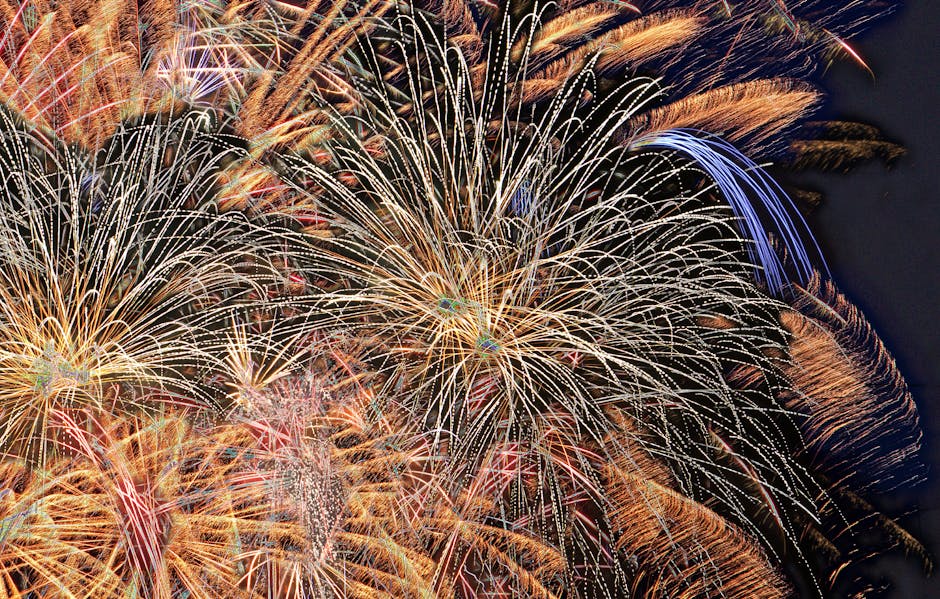
Fireworks are a spectacular blend of chemistry and physics. Understanding the science behind them deepens your appreciation for displays and helps explain why certain colours and effects are achieved through specific chemical compounds.
The foundation of all fireworks is black powder—a mixture of potassium nitrate, charcoal, and sulphur. This ancient explosive provides the basic propulsion and burst effect. However, modern fireworks achieve their stunning visual effects through carefully selected metal compounds mixed with black powder.
Colours in fireworks come from metal salts:
- Red and pink effects use strontium compounds
- Blue effects require copper compounds
- Green effects come from barium compounds
- Gold and yellow effects use sodium compounds
- Silver and white effects use aluminium and magnesium
These metal salts burn at specific temperatures, emitting light at particular wavelengths corresponding to different colours. When ignited, the electrons in these metals jump to higher energy levels. As they return to their normal state, they release energy as visible light—the colours we see in the sky.
The intensity and brightness of colours depend on the concentration of metal salts and the temperature of the burn. Higher temperatures produce brighter colours, which is why manufacturers carefully control the chemical composition of each firework. A red firework requires different ratios than a blue one to achieve optimal colour.
Sound effects result from the rapid expansion of gases produced by the explosion. The louder the firework, the more rapidly these gases expand and the more dramatically they compress surrounding air. This explains why larger fireworks produce deeper, more resonant booms—the shock wave is more powerful.
Different firework types achieve their effects through structural design. Roman candles contain multiple small charges stacked vertically, each firing in sequence to create a fountain of sparks. Catherine wheels spin due to angled nozzles directing the thrust tangentially. Aerial shells explode at altitude, with the burst pattern determined by how the internal charges are arranged.
Timing mechanisms use slow-burning fuses to delay explosions. By controlling fuse length, manufacturers determine when effects occur—whether immediately upon launch or after reaching maximum height. Some advanced fireworks use electronic ignition for precise timing of complex sequences.
The brilliance of modern fireworks lies in combining these chemical and physical principles. Pyrotechnicians understand exactly how each component contributes to the final effect, allowing them to design displays of incredible complexity and beauty. Every colour, every sound, every effect you see is the result of careful scientific calculation and chemical knowledge.